 Ultimate guide
Tax Deductions for Real Estate Developers: A 2026 Guide
Table of Contents
- Tax Deductions for Real Estate Developers: What You Need to Know
- Construction Costs and Tax Treatment Across the Development Lifecycle
- Depreciation and Cost Segregation for Real Estate Developers
- Bonus Depreciation for Real Estate: Timing and Eligibility
- Section 179D Deduction for Commercial Buildings and Energy-Efficient Improvements
- Operating Expenses, Financing Costs, and Deductible Business Expenses
- Entity Structure, Partnership Allocations, and Compliance Considerations
- Documentation, Deduction Limits, and Risk Mitigation
- Frequently Asked Questions
Last Updated: October 7, 2026
Tax Deductions for Real Estate Developers: What You Need to Know
Real estate developers face a complex tax landscape: treating a cost as a capital expenditure versus an immediate deduction can shift your liability significantly.
A single misclassification can cost thousands, yet many developers leave money on the table because they don't understand which expenses qualify, when they become deductible, and how entity structure affects what they can claim.
Construction Costs and Tax Treatment Across the Development Lifecycle
How you treat construction costs determines whether you deduct them immediately or capitalize them over time.
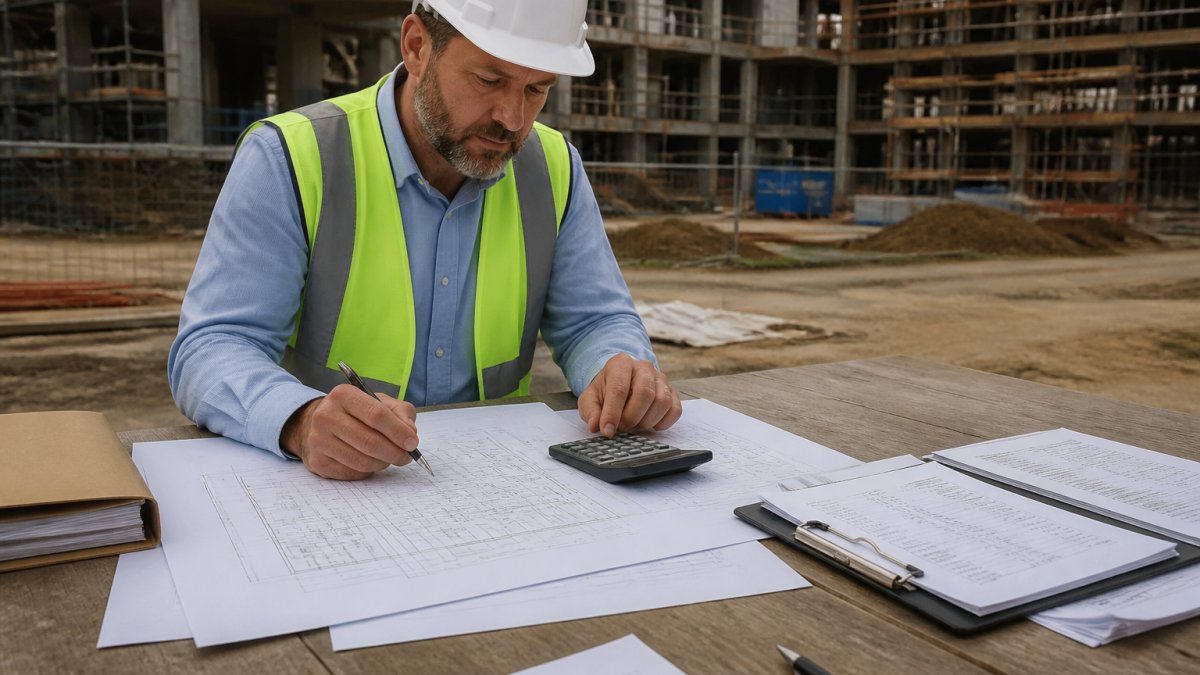
Capitalization vs. Immediate Deduction
Construction costs fall into two categories: those you capitalize (add to basis and depreciate) and those you deduct immediately.
Capital improvements, structural additions and modifications that add value or prolong useful life, must be capitalized and depreciated.
The line between the two is where disputes arise: a developer replacing a worn roof might claim a repair, while the IRS might argue a new roof extends the building's life and is capital.
Inventory vs. Depreciable Property
Developers must also classify property as inventory or depreciable property, a distinction affecting deduction timing and tax rates.
If the IRS reclassifies your development property as inventory, you lose depreciation deductions and face higher rates on gains. Hold property as investment real estate and you must recapture depreciation as ordinary income on sale, but you benefit from years of deductions in the interim.
The IRS looks at intent, frequency of sales, and how you market and hold property.
Depreciation and Cost Segregation for Real Estate Developers
Depreciation lets you deduct the cost of buildings and improvements over their useful lives. For most commercial real estate, the recovery period is 39 years, a long wait, unless you use cost segregation.
How Cost Segregation Accelerates Deductions
Cost segregation reclassifies building components into shorter recovery periods. Instead of depreciating the entire structure over 39 years, you identify personal property and land improvements qualifying for 5-, 7-, or 15-year recovery periods.
A cost segregation study requires a detailed engineering analysis and formal written report, typically costing several thousand to tens of thousands of dollars depending on project size.
The IRS scrutinizes aggressive segregation claims.
Bonus Depreciation for Real Estate: Timing and Eligibility
Bonus depreciation under §168(k) lets you deduct a percentage of qualified property's cost in the year it is placed in service rather than over the asset's class life. For developers, the rules are narrower than for equipment-heavy businesses, but the timing stakes are just as high.
What Qualifies for Bonus Depreciation in a Development Project
Qualified property generally means tangible property with a recovery period of 20 years or less, plus certain software, water utility property, and qualified improvement property (QIP). For a developer, the practical categories are:
- Qualified improvement property (QIP). Defined in §168(e)(6) as any improvement to the interior of a nonresidential building, provided the improvement is placed in service after the building was first placed in service and does not include enlargements, elevators or escalators, or the internal structural framework. QIP is 15-year property and is eligible for bonus depreciation.
- Land improvements. Parking lots, landscaping, sidewalks, and similar site work are typically 15-year property and eligible.
- 5- and 7-year personal property. This is where cost segregation does its work, carpeting, specialty lighting, certain fixtures, and equipment can be reclassified into these shorter lives and become bonus-eligible.
The Phase-Down and the 2025 Restoration
Practically, a building placed in service in 2024 captured only 60% bonus on eligible components, while the same building placed in service in 2025 or later captures 100%. On $2 million of bonus-eligible components, that is the difference between a $1.2 million and a $2 million first-year deduction.
Placed-in-Service Timing and the Year-End Lever
Bonus depreciation is claimed in the year the property is placed in service, the year it is ready and available for its intended use. For a developer, that is usually the certificate of occupancy date, not the last punch-list item or first tenant signing.
This creates a legitimate year-end lever. A building substantially complete in December but not placed in service until January shifts the entire bonus deduction into the following tax year.
Interaction With Cost Segregation
Bonus depreciation and cost segregation compound. A cost segregation study reclassifies components into 5-, 7-, and 15-year lives; bonus depreciation then lets you deduct a large share of those costs immediately. Without the study, components stay in the 39-year bucket and bonus has nothing to attach to; without bonus, the study still accelerates deductions, but over 5, 7, and 15 years rather than year one.
State Conformity Is Not Automatic
Many states decouple from federal bonus depreciation, disallowing it or requiring an addback with a separate state depreciation schedule. A developer with multi-state projects should expect to maintain two schedules, federal and state, and file the appropriate addback forms. This is a common source of amended returns in the industry.
Section 179D Deduction for Commercial Buildings and Energy-Efficient Improvements
Section 179D provides a deduction for energy-efficient commercial building property.
The deduction is based on the cost of qualifying improvements, up to a per-square-foot limit that changes annually.
To claim it, you need a qualified energy audit or energy model showing the building meets efficiency requirements.
The deduction goes to the person who originally placed the property in service, typically the developer or building owner.
Operating Expenses, Financing Costs, and Deductible Business Expenses
Beyond construction and depreciation, developers can deduct ordinary business expenses. But the harder question is not whether a cost is deductible, it is when. Uniform capitalization and interest capitalization rules can push otherwise-deductible costs into basis, deferring the benefit for years.
Mortgage Interest and Property Taxes
Interest on debt used to acquire, construct, or improve development property is generally deductible under IRC §163, and property taxes under §164. But two rules can override that treatment:
- Interest capitalization under §263A(f). Interest attributable to the production period of designated property must be capitalized into basis rather than deducted currently. Real property produced by the taxpayer, including buildings a developer constructs, is designated property. The production period generally begins when construction starts and ends when the property is ready to be placed in service or held for sale.
- Uniform capitalization under §263A. Direct and allocable indirect costs of producing real property must be capitalized. For developers, this sweeps in a wide range of costs that a landlord would simply expense.
A common pattern: a developer holding land and a partially built building for sale must capitalize interest, property taxes, insurance, and certain overhead during the production period. One who completes the building and holds it for rent generally stops capitalizing interest once placed in service and deducts it as an operating expense.
The Inventory vs. Held-for-Rent Split Drives Everything
The biggest determinant of how operating costs are treated is whether the property is inventory (held primarily for sale to customers) or a capital asset / §1231 property (held for investment or used in a trade or business).
| Cost | Held for Sale (Inventory) | Held for Rent (Business/Investment) |
|---|---|---|
| Interest during production | Capitalize under §263A(f) | Capitalize during production; deduct after placed in service |
| Property taxes during production | Generally capitalized | Generally capitalized until placed in service |
| Property taxes after placed in service | N/A, property is sold | Deduct as operating expense under §164 |
| Repairs and maintenance | Capitalized into inventory cost | Deductible under §162 if not a §263(a) improvement |
| Selling costs | Reduce amount realized / inventory cost | Reduce amount realized on sale |
The practical reality: a developer who flips finished lots or spec homes runs an inventory business, and most carrying costs get baked into basis and recovered only on sale.
Professional Fees, Permits, and Licensing
Legal, accounting, engineering, and architect fees incurred in the ordinary course of the development business are generally deductible under §162, as are title searches, surveys, permits, licensing fees, and professional dues.
But §263(a) and the tangible property regulations (the "repair regs" at Treas. Reg. §1.263(a)-1 through -3) require capitalizing costs that facilitate the acquisition or improvement of property. In practice:
- Capitalize: fees for negotiating a land purchase, obtaining zoning or entitlements tied to a specific parcel, forming the development entity, and obtaining construction financing.
- Deduct: routine legal work, annual entity maintenance, general tax return preparation, and fees tied to ongoing operations rather than a specific acquisition.
The line is facts-and-circumstances, and the IRS has been active here. Document each fee's purpose when incurred; reconstructing intent two years later in an audit rarely goes well.
Business Interest Limitation Under §163(j)
Even interest that escapes capitalization may be limited. Section 163(j) caps business interest deductions at 30% of adjusted taxable income, with a small-business exception (generally gross receipts under $29 million for 2024, indexed). Real estate businesses can elect out under §163(j)(7)(B) if they qualify, but the election trades the interest deduction for slower depreciation, a trade-off requiring modeling, not intuition.
Entity Structure, Partnership Allocations, and Compliance Considerations
How you structure your development business, sole proprietorship, LLC, partnership, S-corp, or C-corp, affects which deductions you can claim and how they flow to your tax return.
Pass-through entities (partnerships, S-corps, LLCs) pass depreciation and operating deductions through to owners' returns.
Partnership allocations matter. A limited partner's ability to use depreciation deductions may be limited by passive activity loss rules.
Entity structure also affects liability and compliance. Many developers use separate LLCs per project to isolate liability and simplify accounting.
Documentation, Deduction Limits, and Risk Mitigation
The IRS scrutinizes developer deductions closely.
Deduction limits apply in certain situations. For partnerships or S-corps, net operating losses may be limited.
Documentation also protects you in an audit. The IRS may challenge depreciation periods, cost segregation studies, or capital-versus-ordinary classifications.
Real estate development offers significant tax deduction opportunities, but only if you understand the rules and plan accordingly.
Frequently Asked Questions
What expenses can real estate developers deduct from their taxes?
Real estate developers can deduct a broad range of business expenses, including construction costs (when capitalized and depreciated), mortgage interest, property taxes, insurance premiums, repairs and maintenance, property management fees, legal and accounting fees, permits and licensing costs, utilities, marketing expenses, and vehicle expenses. The key is distinguishing between capital expenditures (which are depreciated over time) and operating expenses (which may be deducted immediately). Proper documentation and classification are essential to maximize deductions while remaining compliant with IRS requirements.
How does cost segregation for real estate developers reduce my tax liability?
Cost segregation for real estate developers involves breaking down building and improvement costs into components with different depreciation periods. Instead of depreciating the entire building over 39 years, cost segregation studies identify items that qualify for 5-, 7-, or 15-year depreciation schedules. This accelerates deductions in early years, reducing taxable income and deferring tax liability. A formal cost segregation study by a qualified engineer or appraiser is required to support this strategy. The upfront cost of the study is typically recovered through tax savings within the first few years.
Can I claim bonus depreciation on real estate development projects?
Yes, bonus depreciation for real estate is available under current tax law, though rules vary by asset type and placed-in-service date. Qualified property, including certain building components and equipment, may qualify for 100% bonus depreciation (or a percentage, depending on the tax year). However, real estate buildings themselves generally do not qualify for bonus depreciation. Bonus depreciation for real estate works best when combined with cost segregation, allowing you to accelerate deductions on qualified personal property and building components. Consult a tax professional to determine what qualifies in your project.
What is the Section 179D deduction for commercial buildings, and who qualifies?
The Section 179D deduction for commercial buildings allows building owners and designers to deduct up to $5 per square foot for energy-efficient commercial building property placed in service after December 31, 2022. Qualifying improvements include HVAC systems, roofs, insulation, and lighting that reduce the building's annual energy and power costs by at least 50% compared to a baseline building. The deduction can be claimed by the building owner, the designer (if the owner elects), or a tenant. A qualified professional must certify the energy savings. This incentive effectively reduces the cost basis of energy-efficient improvements.
How should I treat land costs versus building costs for tax purposes?
Land costs and building costs are treated very differently for tax purposes. Land is not depreciable and cannot be written off; its cost is added to your basis and recovered only when the property is sold. Building costs and improvements are depreciable over 39 years (for commercial buildings). This distinction matters because it affects how you allocate total purchase or construction costs between land and building. An appraisal or cost segregation study can help establish the proper allocation. Misclassifying building costs as land (or vice versa) can trigger IRS scrutiny and penalties.
What records should I keep to support my real estate development tax deductions?
Keep detailed records including purchase agreements, construction contracts, invoices and receipts for all materials and labor, canceled checks and payment records, property appraisals or cost segregation studies, mortgage statements showing interest paid, property tax bills, insurance policies and premiums, permits and licensing documents, and contemporaneous notes on the business purpose of expenses. For depreciation, maintain records of placed-in-service dates and the basis of each asset or component. The IRS may request these documents to substantiate deductions, particularly for large projects or aggressive strategies like cost segregation. Poor documentation is a common reason deductions are disallowed.
How do entity structure and partnership allocations affect my deductions?
Your entity type (sole proprietor, LLC, S-corp, C-corp, or partnership) and ownership structure determine how deductions flow to your tax return and affect your overall tax liability. In partnerships and S-corps, deductions are allocated to partners or shareholders based on ownership percentage or a special allocation agreement. Passive activity loss limitations may restrict how much depreciation you can deduct in a given year, depending on your income level and involvement in the business. Entity-level decisions made at formation or restructuring can significantly impact deduction timing and tax outcomes. A tax professional familiar with real estate development can help you choose the right structure for your situation.
What are the biggest compliance risks when claiming real estate development deductions?
Common compliance risks include misclassifying capital expenditures as operating expenses (or vice versa), failing to capitalize construction costs properly, overstating depreciation or cost segregation allocations without proper documentation, claiming passive activity losses in excess of income limits, missing the placed-in-service date for bonus depreciation eligibility, and inadequate record-keeping. The IRS scrutinizes real estate development returns, especially those with large depreciation or cost segregation deductions. Penalties for overstatement can be substantial. Working with a qualified tax professional and maintaining meticulous documentation significantly reduces risk and ensures you capture legitimate deductions while staying compliant.